Discovering a Yixing Zisha Tea Mug
There is something rather wonderful about finding an object you weren’t necessarily looking for, but which immediately feels as though it belongs with you.
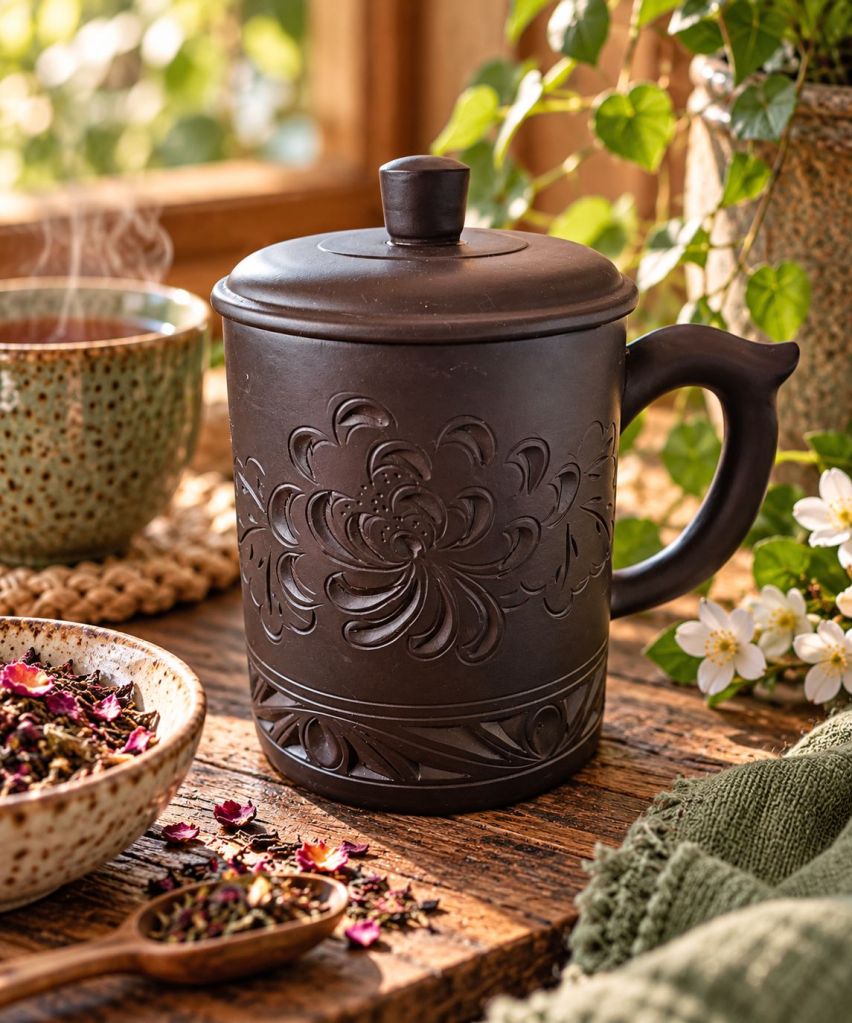
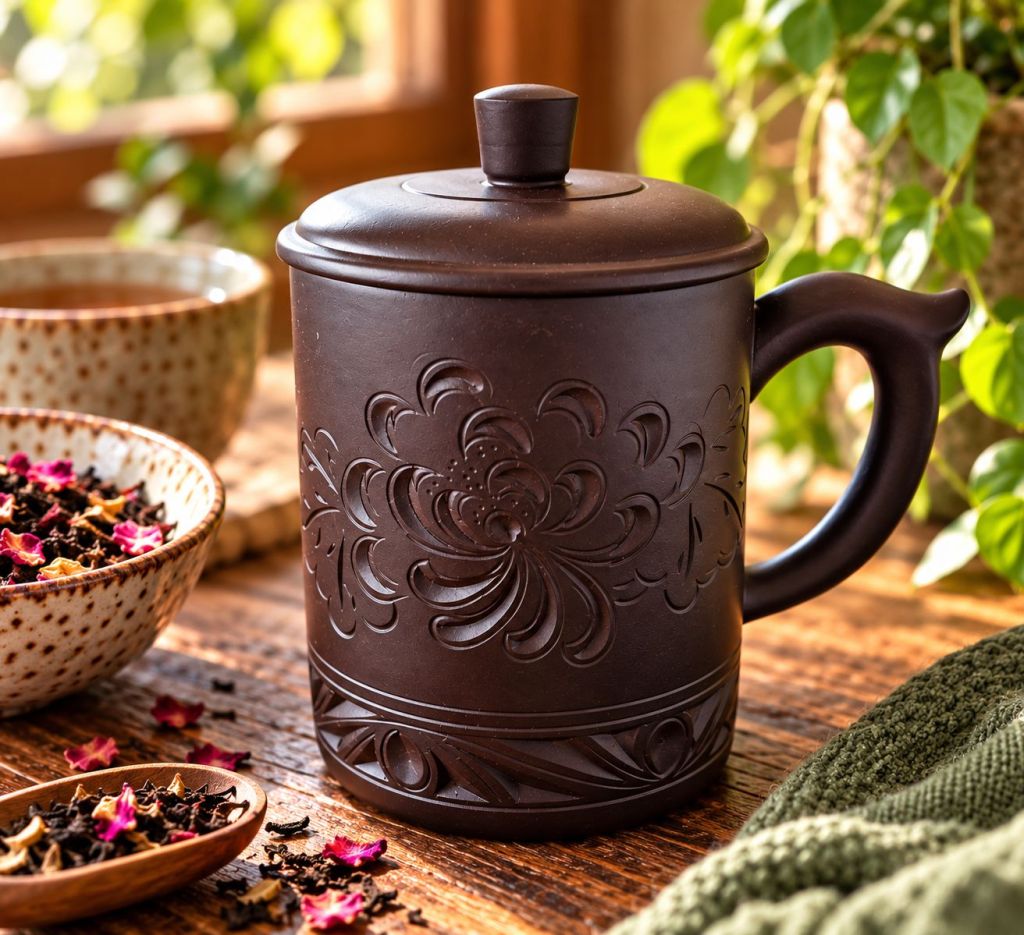
My latest tea-related find is this beautiful dark clay lidded mug, sold as a traditional Chinese Yixing zisha – or “purple clay” – tea mug.
With its deep earthy colour, floral detailing, matching lid and wonderfully shaped handle, it caught my eye immediately.
Naturally, I brought it home.
And then, equally naturally, I disappeared down a small tea-related rabbit hole trying to find out more about it.
What is Yixing Zisha?
Yixing tea ware comes from the region around Yixing in Jiangsu Province, China, an area with a centuries-old tradition of producing distinctive unglazed clay vessels for tea.
The term zisha (紫砂) is usually translated as “purple sand” or “purple clay”, although that description is slightly misleading if you’re expecting something actually purple. Depending on the clay and firing, zisha ware can appear in beautiful earthy shades ranging from reddish brown and terracotta through to deep brown and purplish tones.
Yixing is probably best known for its little teapots, which have become closely associated with traditional Chinese tea preparation, particularly teas such as oolong and pu-erh.
But the tradition isn’t confined to teapots. Cups, mugs and other vessels have also been produced in these distinctive clays — including lidded mugs like my new find.
Why Is Yixing Clay So Special?
Part of the fascination with traditional Yixing ware is that the clay is generally left unglazed.
Unlike a glazed ceramic surface, which forms a glass-like barrier between the tea and the pottery, unglazed clay gradually develops character through use. Over time, repeated brewing can contribute to a subtle patina on the vessel.
It’s one of the reasons serious Yixing tea enthusiasts sometimes dedicate a particular pot to one tea, or perhaps one family of teas.
I’m not entirely sure I’m ready to become that disciplined about my tea drinking.
But I do rather love the idea that a piece of tea ware can quietly change as it becomes part of your everyday rituals.
The Lovely Ritual of a Lidded Mug
One of the things that attracted me to this particular piece was its lid.
There’s something inherently slow about a lidded tea mug.
Leaves in.
Hot water over.
Lid on.
Wait.
No hurried tea bag dunked three times before being abandoned on a saucer.
It encourages you to give the tea a few minutes to do what tea does best.
The floral decoration is equally lovely. Rather than being painted onto the surface, the design is formed in the clay itself, giving the mug texture and interest while retaining that beautifully simple, earthy appearance.
It feels practical rather than precious — something that was actually intended to make and drink tea from.
And those are often my favourite things to collect.
Then I Turned It Over…
Of course, curiosity eventually got the better of me.
I turned my new tea treasure upside down.
And there was another clue.
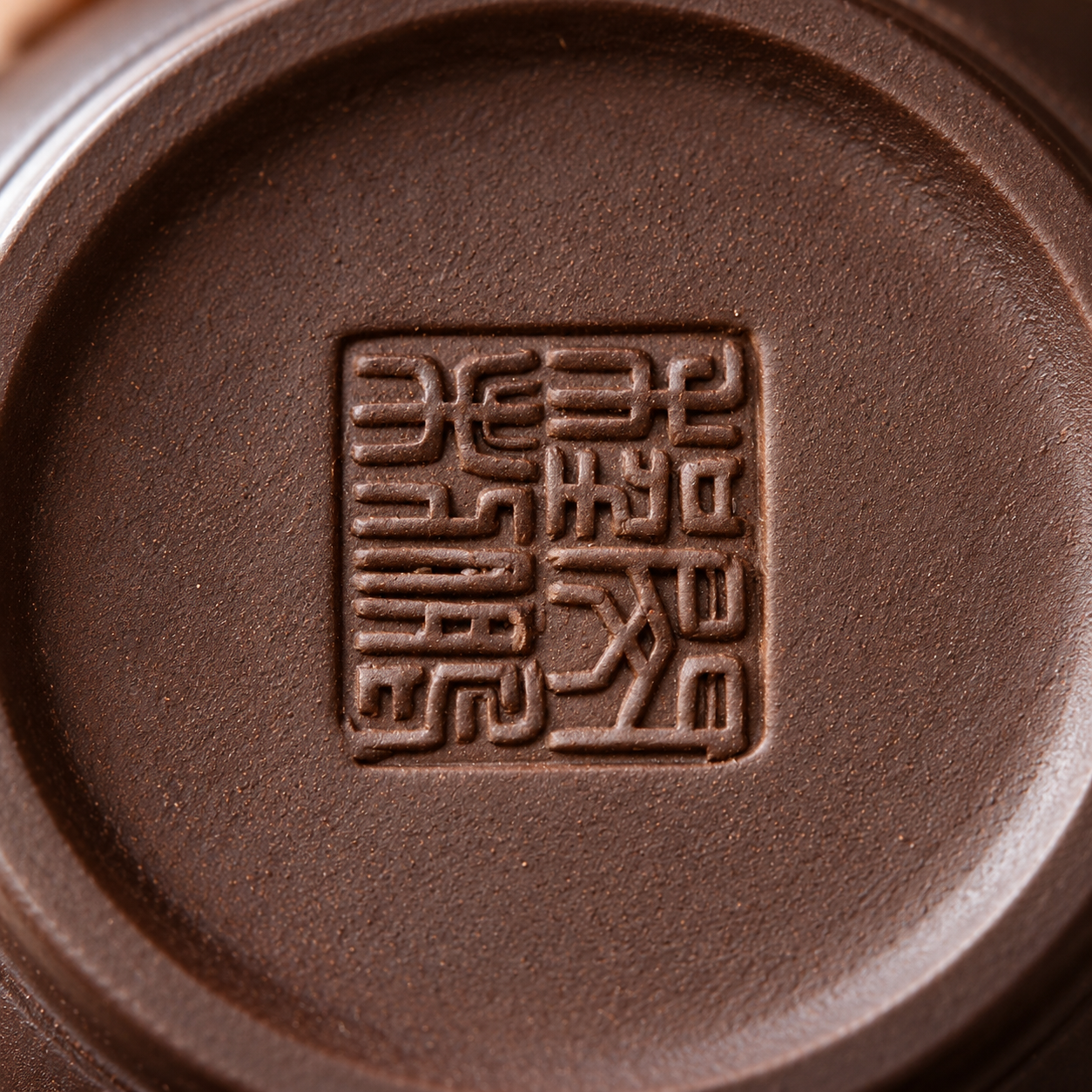
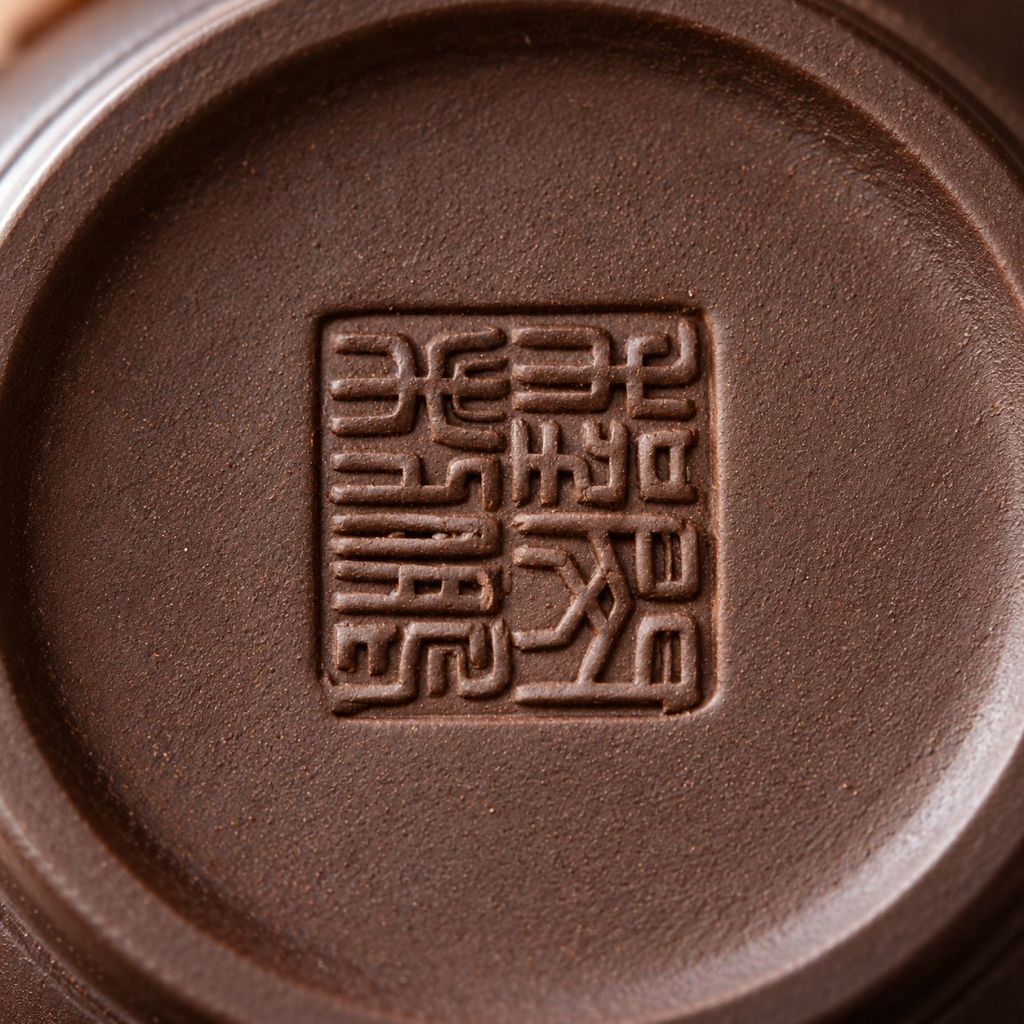
Pressed into the base is a square seal written in stylised Chinese seal script.
After a little investigating, the mark appears to be a form of 中國宜興 – Zhōngguó Yíxīng – meaning “China Yixing” or “Yixing, China.”
Suddenly, the seller’s description of my find as a Chinese Yixing purple-clay tea mug had a little more substance behind it.
The mark isn’t necessarily the signature of an individual artist. Versions of “China Yixing” marks have appeared on Yixing wares, including factory-produced pieces, particularly during the twentieth century.
That doesn’t mean the little stamp can tell me everything, though.
A seal alone can’t authenticate the precise composition or source of the clay, identify its maker or reliably date the piece. Yixing marks have also been reproduced, so identification involves looking at the clay, construction, workmanship and provenance as well as the mark itself.
I’ve searched beneath the lid and around the mug for further clues, but so far there are no other markings.
And so, for now at least, some of its history remains a mystery.
And I Rather Like That
I think this is one of the things I enjoy most about collecting old, vintage and unusual tea pieces.
Not everything arrives with its history neatly attached.
Someone made this mug.
Someone formed or finished its rich brown clay, decorated it with that lovely flower, added its lid and pressed the “China Yixing” seal into its base before it began its journey.
At some point it left China.
Eventually it made its way to New Zealand.
And then one day I spotted it for sale second-hand.
How many cups of tea has it held?
Was it someone’s favourite mug?
Was it bought on a trip, given as a gift, or simply chosen because someone thought it was beautiful?
How long has it been here?
I have absolutely no idea.
And perhaps I don’t need to.
Tea Ware Doesn’t Have to Match
There’s another reason I particularly love finds like this.
Tea ware doesn’t have to match.
It doesn’t have to be new.
It certainly doesn’t have to be expensive.
Sometimes a handmade mug, an old teapot, a chipped-but-loved cup or an unexpected second-hand treasure can bring far more pleasure to the ritual of tea than an immaculate matching set ever could.
They have character.
They invite curiosity.
And occasionally, when you turn them over, they send you down an unexpected rabbit hole into the history of Chinese tea ware.
My little Yixing mug has now earned its place in the Tea Chest.
I suspect it will be particularly lovely for those quiet afternoon brews when there’s nowhere I need to be, nothing terribly urgent to do, and the most important decision of the moment is simply…
Which tea shall I put in it?
Because sometimes the best tea ritual begins not with the tea at all.
It begins with the vessel you choose to make it in.
🍃☕
Until next time, put the kettle on.
The Tea Chest Blog


Beautiful post!!
LikeLike